

You Still Have A Question
if you cannot find answer to your question our FAQ, you can alwas contact us. web will answer you shortly!
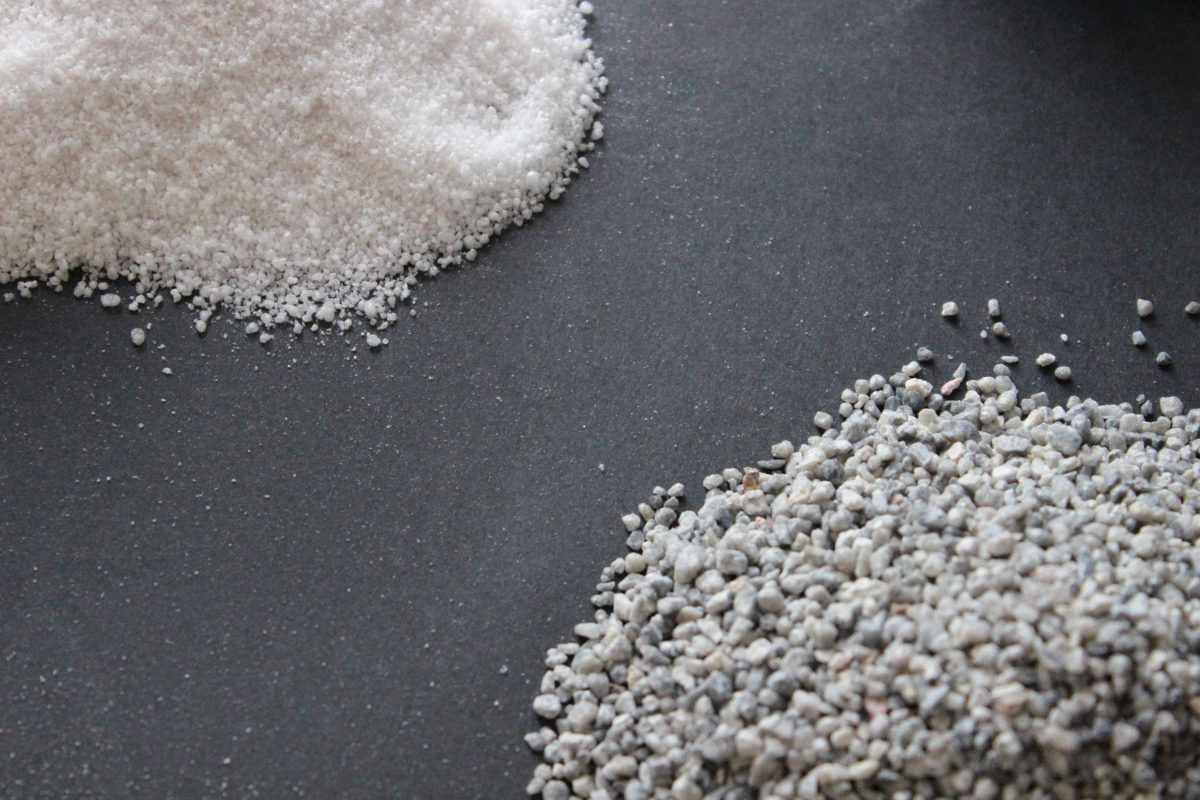
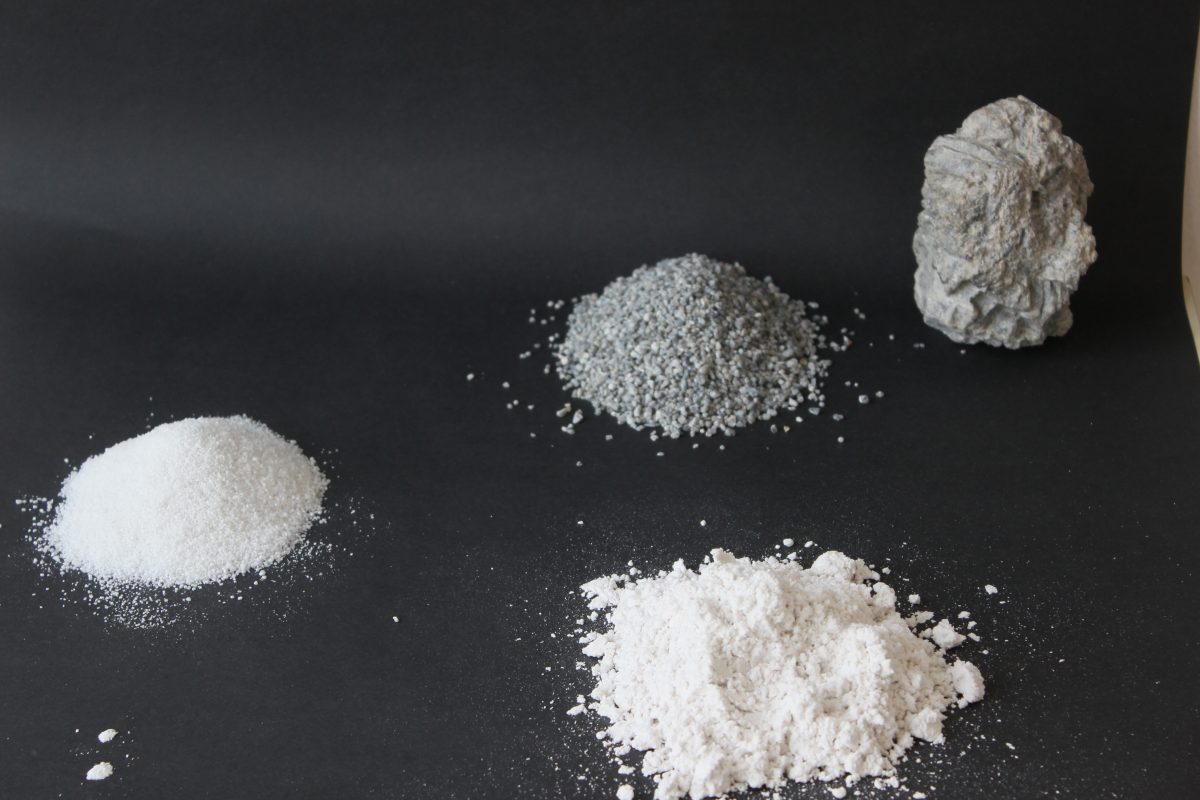
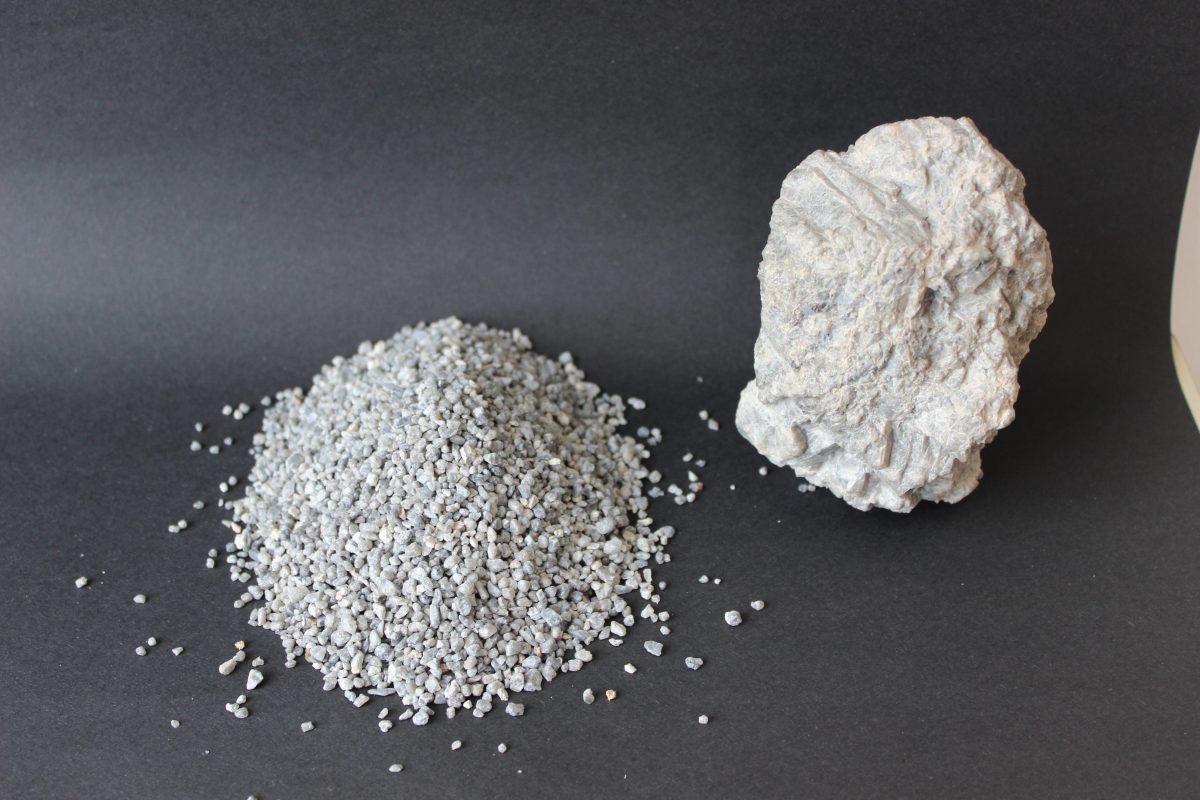
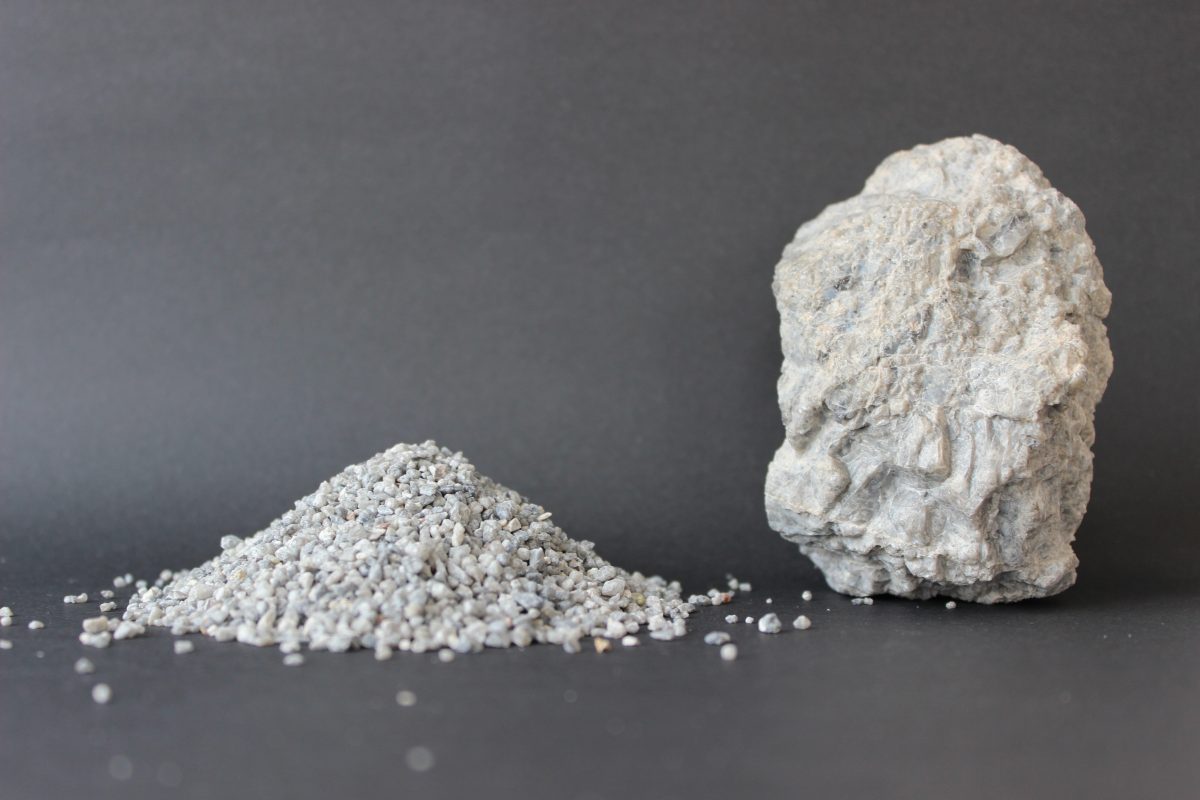
Perlite – The Expanding Natural Miracle
Perlite, a pearly, amorphous (without a definite form), and glassy volcanic rock, can expand to about 20 times its original volume when heated within a softening temperature range of 760-1090°C. This expansion occurs due to the water present in the raw rock. When perlite ore is rapidly heated, the water begins to vaporize, which leads to the expansion of the softening stone. Expanded perlite gains its distinct and unique lightweight physical properties by forming small, glass-like bubbles.
Perlite ore is an acidic volcanic rock that has erupted from volcanic centers as a result of volcanic activity or occurs locally in the form of domal uplifts.
Applications:
- Filter Perlite
Perlite is a natural mineral widely used in the filtration of liquid products in the food and beverage industry. The main reasons for its frequent preference over diatomite (kieselguhr) include its sterile structure, absence of organic matter, and a neutral pH value in the range of 6.6-8. These properties ensure its safe use on food substances.
Thanks to its unique structure, perlite offers a wide network of microscopic channels. This structure provides ideal flow rates and clarity for different applications. Perlite filter aids do not alter the taste, color, or odor of the filtered liquids. Furthermore, they are practically insoluble in substances like mineral and organic acids. Expanded micronized perlites are generally used in filtration processes.
- Perlite in the Construction and Building Sector
Perlite, thanks to the pores in its structure, possesses exceptional thermal and sound insulation properties. Due to this characteristic, it is widely used in buildings for plastering, screed, roofing, and inter-floor insulation applications. Being a lightweight material, it reduces the dead load of buildings, increasing their earthquake resistance. Thanks to its inorganic structure, it does not lose its properties at high temperatures and prevents the spread of fire, ensuring a safe environment.
- Cryogenic Perlite
Cryogenic refers to temperatures below -100 degrees Celsius. Cryogenic tanks are designed to transport and store gases that are in liquid form at these temperatures. Insulation is of great importance to prevent the evaporation of liquefied gases.
Perlite insulation is used in double-walled tanks for the storage of liquefied gases at temperatures down to -270°C. Perlite is freely filled between the double walls of the tank at atmospheric pressure or under vacuum.
- Perlite in Waste Oil and Petroleum Cleanup
Perlite is a mineral-based, processed, water-repellent (hydrophobic), and recoverable sorbent and filter material used to separate all mineral and vegetable liquids, such as oil and hydrocarbons, from water and wastewater environments. Available in granular form and packaging suitable for all types of industries, perlite is a fire-resistant absorbent and purification material even under storage conditions.
Especially coarse granular perlite is effective in separating mineral oil derived from petroleum, crude oil, diesel fuel, and similar materials mixed with water. Expanded perlite is generally used in such applications.
- Perlite in Casting
Perlite is widely used as an additive to casting sand in the foundry industry. While it is added to casting sand at a rate of 10-12% by volume in iron and steel castings, this rate can go up to 25-30% in the casting of other materials. Unexpanded, classified raw perlite ore is generally used in the foundry industry.
- Perlite in Agriculture
a) Perlite in Soil-Based Agriculture
In soil-based agriculture applications, perlite is used as a soil conditioner or to reduce water loss, depending on the soil’s needs. A good soil conditioner is expected to have properties such as high available water capacity, high base exchange and heat capacity, low salt content, and low thermal conductivity. Perlite possesses all these properties.
When mixed with heavy and sticky soils, perlite improves drainage and aeration properties, preventing the formation of crust, cracking, waterlogging, swelling, and shrinkage.
Perlite, used as a soil conditioner in greenhouses, gives the soil a coarse structure while also increasing the soil’s water retention capacity and the availability of nutrients. With perlite, the physical properties of greenhouse soils, which are more important than their chemical properties, can be changed in the desired direction.
In greenhouses with bottom watering and drip irrigation, water usage can be reduced by half when a 4-5 cm thick layer of coarse-grained perlite is spread on the beds. A study conducted at the Faculty of Agriculture of Çukurova University showed that the top part of the greenhouse soil was mixed with coarse perlite at a ratio of 1:4. While tomatoes grown here were furrow-irrigated 6 times, normal greenhouse soil was irrigated 21 times. This demonstrates that perlite provides a significant saving in terms of water loss and labor.
b) Perlite in Soilless Agriculture
Soilless agriculture practices have become widespread in recent years to address the problems encountered in exhausted greenhouse soils. Especially abroad, soilless agriculture applications are seen at rates reaching 95%. In these applications, perlite can be used alone or mixed with other materials such as peat, sand, and bark.
In soilless agriculture, perlite or perlite-based mixtures are spread in a 10-15 cm thick layer on a black plastic sheet laid over the greenhouse soil, and seedlings are planted on this layer at certain intervals. The water and nutrient needs of the plants are met by irrigation with nutrient solutions.
Another application is to grow plants in 5-10 liter bags filled with perlite or a perlite mixture. This cultivation method is quite easy. Production consists of arranging these bags at certain intervals on black plastic sheets also spread over the soil and meeting the water and nutrient needs of the plants with nutrient solutions.
- Perlite in Textiles
Perlite, thanks to its stable chemical and crystalline structure, is a substance that does not enter into chemical reactions and is insoluble in water. This property allows it to be used as a bleaching agent in the textile industry. In this area, where expanded perlite is generally used, the fact that perlite is a sterile material also offers advantages in terms of health.
Perlite does not excessively abrade the product it is applied to like pumice, does not cause clogging in machines, and is easy to use due to its light weight. It is one of the most sought-after materials in the textile industry, especially in denim washing processes.
Thanks to its sterile and inorganic structure, it is a healthy and safe option. Perlite enables textile products to be given effects in a short time, while causing less wear on machines compared to pumice stone. It does not cause clogging in discharge channels and is easy to use due to its lightness.
Widely used in the textile industry due to its low density, textile perlite does not abrade the product it is applied to and does not cause clogging of machines. Perlite, which is mostly used in washing processes in the textile industry, especially denim washing, is a faster and safer option compared to pumice stone. It is one of the most efficient and safe products used for washing purposes in textiles.